Off to meet with PALS (Patient Advisory Liaison Service) to make a complaint about the handling of my father's case. Referred by GP August 3rd, Diagnosed by ultrasound September 26th, We were not actually informed until October 17th and he died November 20th. He never actually got any treatment for the cancer itself. He developed jaundice the week before chemotherapy was due to start and that meant the treatment had to be delayed until the jaundice was controlled, unfortunately it never was. If treatment had started a few weeks earlier then he was clear of jaundice!
Complaints and Concerns
http://www.pals.nhs.uk/
Tuesday, 29 November 2011

Monday, 28 November 2011
Only 3 working days left in 2011
First day of the rest of my life! Tried to tell the tax man about my dad but they won't speak to me without a copy of the death certificate. I've now posted one off to them but they say "All post is dealt with in order of receipt" I asked what that meant and they told me that for receipt of post they are so far behind that "today" is actually December 20th. So taking the strike and Christmas into account my letter to them is unlikely to be even opened until 4th or 5th January 2012! What a way to run a country!
Friday, 25 November 2011
Dad's Funeral
Thank you very, very much to everyone who attended my dad's funeral today. It was a great comfort to see St.Hildas Church so full and know that so many people wanted to come and say goodbye to my dad. As a former councillor he was entitled to a civic funeral, with the great and the good of the council in attendance. However, he made it quite clear to me that he didn't want that. He only wanted people at the service who genuinely wanted to be there rather than those attending out of duty or from some need to be seen. A sincere thanks again to everyone who came. Rosemary gave the eulogy and it was a great tribute to her grandad. Afterwards we had a house full of young people who came to pay their respects to my dad. How many 80 year olds would have teenagers at their funeral who were not relatives or family but who came out of respect for the departed. I think we gave my dad a send off he could have been proud of. RIP Dad
Tuesday, 22 November 2011
RIP Derek Allison 1931 - 2011

Sadly that list has now shrunk to just my family. My father died on Sunday night. He died at home with my mother at his side holding one of his hands and I was holding the other. There was no pain at the end, he just stopped breathing and slipped away. Six weeks previously he and I had been on a roof top re-pointing ridge tiles, now he is gone. I miss him already and know I will ask my self every day “What would my dad do ?”
My dad, Derek, has been married to my mum Aileen (nee Outhwaite) for 57 years. They had been sweethearts since she was 16 and he was 17. Many of my friends have remarked that they have never met a more devoted couple. It would be wrong to say they never had a cross word, a family story records one falling out before they were married that lasted two years and which, according to my father, was reconciled when my mother “came crawling back” My mother obviously has a different recollection of how they got back together.
Family was everything to my dad. In addition to me they also had a second son, my younger brother David (49), who is a Director of the Austrian National Oil Company and currently lives in Budapest. My dad was always extremely proud of David’s achievements but at the same time sad that his career took him so far away from home. My parents also have five grandchildren. Their two youngest grandsons, Charlie and John, are still at boarding school. Two granddaughters, Rosemary and Ria, are both at University and their eldest grandson, Edward, is an engineering cadet with P&O Cruise lines, something that my father was especially proud of considering his own national service was spent at sea as a Merchant Navy Engineering Officer. One of my few regrets is that my dad was not being able to see Edward march in this year's rememberance parade wearing his Merchant Navy Uniform. Sadly my dad was just too tired by then to make the trip round to the sea front.
My dad was born in 1931 and attended the Hartlepool Boys Technical Day School. Like many a Hartlepool lad before him he served his time in the drawing office at British Steel before joining the Merchant Navy as an Engineering Officer with the Empire Line. While in the Merchant Navy he served on troopships for both the Suez conflict and the Korean War. My dad's involvement with the sea did not end when he left the Merchant Navy as he was a member of Tees Sailing Club for many years and was Commodore of the club in the 1980's. He was an accomplished table tennis player in his youth and a keen cyclist. In 1951 he and a group of friends even cycled to London and back to see the Festival of Britain. He hadn't played competitive table tennis for many years but he still went for a ride on his bike nearly every day.
After completing his national service Derek retuned to Hartlepool and worked in Port Clarence at British Steel (Chemicals) where he was the Works Engineer until his retirement in 1995. After retiring my dad took my mother on various holidays to visit many of the ports he had called at during his time in the Merchant Navy. This included far east destinations such as Honk Kong and Shanghai. My parents loved Hong Kong and also made two trips to China to see the Forbidden City, the great Wall and the Terracotta Army (or the Territorial Army as my mother called it!). My dad's engineering background however was never far behind and the Three Rivers Hydro Electric Scheme in China was something that impressed him tremendously.
My dad never lost his inquiring mind or his love of a challenge. He and my mother took up skiing when they were in their 50's and he became an accomplished downhill skier before an accident on the piste, where a novice skier collided with him, left him with a damaged knee and ended his involvement with the sport. At 80 years of age he was “the man who can” for several people in Hartlepool when it came to computer problems. I would regularly come home and find my PC had been upgraded without my knowledge since my “hard drive partition was not the latest version” or some other reason that was gobbledygook to me but not to my dad.
I could go on and on. As a Rotarian he visited Rumania to work on a children's hospital, the conditions under which these children lived, and died, was one of the few things I ever knew to make my dad cry. Until 2007 my dad was Chairman of the Hartlepool Headland Parish Council and a Hartlepool Borough Councillor, an Independent member, he had no time for party politics in local government, he thought local councillors should represent their communities and not play party political games. He applied his considerable carpentry skills to building more than one sailing dingy in the basement at home, he could dig a trench with a JCB back actor and drive a bulldozer. He and I worked together to build my current house and last year our family project was the installation of a ground source heat pump, which is currently saving me over £2,000 a year in heating oil bills. However, I think one of the things he would be most proud off are a bunch of flowers that arrived for my mother today. They are from friends of his granddaughter, Rosemary. The flowers made me cry but they were a fantastic tribute. Several of these young people are coming to his funeral on Friday because they loved him like a granddad of their own.
RIP Derek Allison 1931 - 2011
Funeral Service will be held at 10.30am at St.Hildas Church on Friday 25th November 2011. The family would be delighted if anyone who knew my dad and will genuinely miss him would like to come along.
Thursday, 10 November 2011
Putting Hartlepool First
Straight talk and political parties are two things that seem to rarely go together, but a new party launched in Hartlepool, wants to change that. Their aim is to do exactly what their party name says, they are “Putting Hartlepool First”.

Putting Hartlepool First don’t care if you are Labour, Tory, Lib-Dem, UKIP, Green or just about any other party in your national views, so long as at local level you agree to set party politics aside and Put Hartlepool First.
“Hartlepool Hospital is a classic case of national party policy being enforced over local interest” said Hartlepool First’s Leader, Councillor Geoff Lilley. “While the Labour government were in power the town’s Labour Councillors were almost totally silent about the issue, because it was Labour Party Policy. Now the Con-Dems are in power Hartlepool’s labour Councillors are claiming to have always opposed the hospital closure. In my opinion it’s just cynical opportunism and party politics at it’s worst”
Hartlepool First intend to field candidates in the 2012 local elections, which will be fought under the new boundaries. “There is another example of party politics being placed above local interests” said Councillor Steve Gibbon, party treasurer of Hartlepool First. “The new boundaries appear to have been drawn to advantage the Labour party not reflect local wishes. The Headland and Harbour Ward is the glaring example but most of the other ward boundaries are set for party political advantage, not to reflect the natural communities within the town.”
The new party believe that the people of Hartlepool are ready for a change and want councillors who represent them and who Put Hartlepool First. “For too many Councillors in Hartlepool Civic Centre it looks like they put party first, political career second and Hartlepool at best a distant third” said Hartlepool First’s campaigns officer, Stephen Allison. “Hartlepool First want to change those priorities. We want to put Hartlepool First.”
The party has formally registered with the UK Electoral Commission as “Hartlepool Independents – Putting Hartlepool First” and has its own logo. Registration as a party is vital if the group want to stand any chance of really influencing decisions in the Hartlepool Civic Centre. Under the Local Government Act registered parties have several advantages denied to individual independents. “It’s the old story about a bundle of sticks together being stronger than a load of single sticks” said Party Leader Geoff Lilley. “In Hartlepool Council at the moment the independents are easily brushed aside because they don’t work together. Forming Hartlepool First means we can combine our strength and really have a chance of defeating decades of Labour dominance in the Council Chamber”.
http://www.puttinghartlepoolfirst.co.uk/
Contact details; Geoff Lilley, 01429 291542 geoff.lilley@gmail
Putting Hartlepool First don’t care if you are Labour, Tory, Lib-Dem, UKIP, Green or just about any other party in your national views, so long as at local level you agree to set party politics aside and Put Hartlepool First.
“Hartlepool Hospital is a classic case of national party policy being enforced over local interest” said Hartlepool First’s Leader, Councillor Geoff Lilley. “While the Labour government were in power the town’s Labour Councillors were almost totally silent about the issue, because it was Labour Party Policy. Now the Con-Dems are in power Hartlepool’s labour Councillors are claiming to have always opposed the hospital closure. In my opinion it’s just cynical opportunism and party politics at it’s worst”
Hartlepool First intend to field candidates in the 2012 local elections, which will be fought under the new boundaries. “There is another example of party politics being placed above local interests” said Councillor Steve Gibbon, party treasurer of Hartlepool First. “The new boundaries appear to have been drawn to advantage the Labour party not reflect local wishes. The Headland and Harbour Ward is the glaring example but most of the other ward boundaries are set for party political advantage, not to reflect the natural communities within the town.”
The new party believe that the people of Hartlepool are ready for a change and want councillors who represent them and who Put Hartlepool First. “For too many Councillors in Hartlepool Civic Centre it looks like they put party first, political career second and Hartlepool at best a distant third” said Hartlepool First’s campaigns officer, Stephen Allison. “Hartlepool First want to change those priorities. We want to put Hartlepool First.”
The party has formally registered with the UK Electoral Commission as “Hartlepool Independents – Putting Hartlepool First” and has its own logo. Registration as a party is vital if the group want to stand any chance of really influencing decisions in the Hartlepool Civic Centre. Under the Local Government Act registered parties have several advantages denied to individual independents. “It’s the old story about a bundle of sticks together being stronger than a load of single sticks” said Party Leader Geoff Lilley. “In Hartlepool Council at the moment the independents are easily brushed aside because they don’t work together. Forming Hartlepool First means we can combine our strength and really have a chance of defeating decades of Labour dominance in the Council Chamber”.
http://www.puttinghartlepoolfirst.co.uk/
Contact details; Geoff Lilley, 01429 291542 geoff.lilley@gmail
Wednesday, 9 November 2011

Friday, 7 October 2011

Wednesday, 5 October 2011
Quebec

Artists display their wares in its tree-lined squares and Europhiles can shop for fine antiques and savour fine coffee, croissants and La Vie Francais in Parisian-style pavement cafés.
Do not miss the magnificent view from the turrets of medieval-style Chateau Frontenac, which dominates the city. Despite its appearance, this hotel-cum-museum dates from the 19th century, when it was constructed by the Canadian and Pacific Railway Company. A visit here for afternoon tea-with-a-view will make a perfect end to a day ashore.
Aurora Cam shows the port at night at the mment, because yes I am sad enough to be posting this at 6am UK time (soon of course to be Universal time if the French get their way and GMT is consigned to the dustbin!).

Wednesday, 28 September 2011
Boston Tea Party


Learn its fascinating history by following the Freedom Trail or take a subway ride beneath the Charles River to Cambridge, home of the 400-year-old Harvard University. On the other hand, you could simply settle for some world class shopping and lunch with a view of street entertainers at one of the pavement restaurants in the leafy lanes which surround pretty Quincy Market.
Or spend your day exploring the citys neighbourhoods; Back Bay - filled with elegant boulevards and imposing brownstone mansions - is the trendiest district while North End displays Bostons colonial charm at its best.
Tuesday, 27 September 2011
Newport - Rhode Island

Unfortunately the miles of scenic coastline are hidden by a fog bank ast the moment

UPDATE; Fog too thick to land passangers safely (Newport is a "tender" visit where the ship anchors off shore and passengers go ashore in small boasts) so Aurora has departed early and is on its way to its next port!
Monday, 26 September 2011
New York New York
The wonders of Blackberry Messenger mean I am typing this blog post and simultaneously carrying on a conversation with son and heir who is shopping in Maceys in New York. He's survived his first full transatlantic crossing (he'd been across to Greenland but not right over the pond before this trip).
 According to the Aurora Cruise itinerary the ‘Big Apple’ is the USA’s most charismatic city and really does have something for everyone. Love the great outdoors? Stroll through the gorgeous gardens of Central Park, right in the centre of Manhattan. People-watching more your thing? Get a taste of local life in the quaint cafés of bohemian Greenwich Village, or star spot in the boutique and restaurant-lined streets of the sophisticated SoHo and TriBeCa districts.
Feast your eyes at the Metropolitan Museum of Art or enjoy the shopping spree of your life at Saks, Macys, Bloomingdales or Century 21 on Cortlandt Street, which is the worlds largest discount warehouse and near that other must-see, Broadway.
So I'm not jealous, MUCH.

Feast your eyes at the Metropolitan Museum of Art or enjoy the shopping spree of your life at Saks, Macys, Bloomingdales or Century 21 on Cortlandt Street, which is the worlds largest discount warehouse and near that other must-see, Broadway.
So I'm not jealous, MUCH.
Tuesday, 20 September 2011
Edward Stalk - Mid Atlantic

Then it"s a journey to a string of interesting Canadian ports. First, take a stroll around the cobblestone walkways of historic St John, New Brunswick. Then, take in the sparkling coves of Halifax, the imposing walled city of Quebec, where you will have two full days, and the charming port of St. John"s, Newfoundland. They"re all yours to discover before sailing home with Aurora.
Sunday, 4 September 2011
WOH
Received my free copy of "What's on Hatlepool"

Twenty eight glossy A5 pages telling me what entertainment opportunities are available at Hartlepool Town Hall Theatre, Hartlepool Art Gallery, Museum of Hartlepool, the Borough Hall, Hartlepool Maritime Experience, etc.
All good stuff, until the bottom of the last page........

Wouldn't it have been nice if Hartlepool Borough Council could have supported Hartlepool business and had the WOH designed and printed in the town?

Twenty eight glossy A5 pages telling me what entertainment opportunities are available at Hartlepool Town Hall Theatre, Hartlepool Art Gallery, Museum of Hartlepool, the Borough Hall, Hartlepool Maritime Experience, etc.
All good stuff, until the bottom of the last page........

Wouldn't it have been nice if Hartlepool Borough Council could have supported Hartlepool business and had the WOH designed and printed in the town?
Thursday, 1 September 2011
Job Shares - great idea
I remember junior school maths problems about how many holes a number of men could dig in a number of days. The answer always showed the more days a man worked the more holes he could dig. Simple really!
Now try applying simple maths to the question about how many personal policies or strategies can a number of Chief Personnel Officers write in a number of days? The answer must be that if Hartlepool can share a Chief Personnel Officer with Darlington then there has not really been a full time job for a Chief Personnel Officer at either local authority. Unless of course neither has been digging as many holes as they could? Possibly that's not a bad thing because the last thing local government wants are more strategies or policies. Of course getting absenteeism down would be one thing a dynamic personnel chief might address, but no doubt she'll be too busy driving between Hartlepool and Darlington to worry about that?
How about also sharing a Director of Children and Adult Services? The current post holder in Hartlepool is going to be filling the Chief Executive’s job for six months. The job she was doing can’t be that onerous if it can be left vacant for half a year? This begs the further question of how many people at Hartlepool (and Darlington Councils) are currently being paid a full time wage for a job that only needs to be done part time, or maybe could be dispensed with altogether. Bring on more job shares I say.
Now try applying simple maths to the question about how many personal policies or strategies can a number of Chief Personnel Officers write in a number of days? The answer must be that if Hartlepool can share a Chief Personnel Officer with Darlington then there has not really been a full time job for a Chief Personnel Officer at either local authority. Unless of course neither has been digging as many holes as they could? Possibly that's not a bad thing because the last thing local government wants are more strategies or policies. Of course getting absenteeism down would be one thing a dynamic personnel chief might address, but no doubt she'll be too busy driving between Hartlepool and Darlington to worry about that?
How about also sharing a Director of Children and Adult Services? The current post holder in Hartlepool is going to be filling the Chief Executive’s job for six months. The job she was doing can’t be that onerous if it can be left vacant for half a year? This begs the further question of how many people at Hartlepool (and Darlington Councils) are currently being paid a full time wage for a job that only needs to be done part time, or maybe could be dispensed with altogether. Bring on more job shares I say.
Alicante - main city and cruise port on Spain’s Costa Blanca
Been a bit quiet on the Edward Stalking front recently. I've still being logging into "Aurora Cam" but the ship has been at sea so not much to report. Today however they are docked in Alicante so there is a new view on the cam.

Alicante is built around a natural harbour and is the main city and cruise port on Spain’s Costa Blanca. Of course Hartlepool's Mayor shared a similar vision for Hartlepool to occupy the position as the main city and cruise port on England's east coast, a vision that so far remains unfulfilled. Hartlepool and Alicante do however have many things in common, apart from the blue skies and warm sunshine of course. Alicante, is also a top beach resort in its own right (Hartlepol has the Block Sands and the paddling pool, although who knows for how much longer after the Heugh falls down). Alicante has a sophisticated Mediterranean feel (Hartlepool hasn't) with its restored old town (Hartlepool Headland) adding to its charm (rows of boarded up terraced houses waiting for new Housing Hartlepool Estates?). Alicante has the attraction of its sandy beaches (Seaton?). Dubbed the ‘City of Light’ when founded by the Romans (Hartlepool, dubbed the place they 'hang monkeys' by the French?), Alicante is still a relaxing place to walk around (As is Hartlepool because all the shops are shut).
Down from the impressive Castillo de Santa Barbara fortress (Hartlepool Civic Centre) which offers impressive views across the city, most activity centres in the streets around the Ayuntamiento (Church Street), a plaza area buzzing with restaurants and tapas bars. There are also many cafés along the seafront (Navigation Point).
Works by artists including Dali, Miro and Picasso are on show at the Museo de Arte Siglo and there is also an archaeological museum (Historic Quay and Museum of Hartlepool.
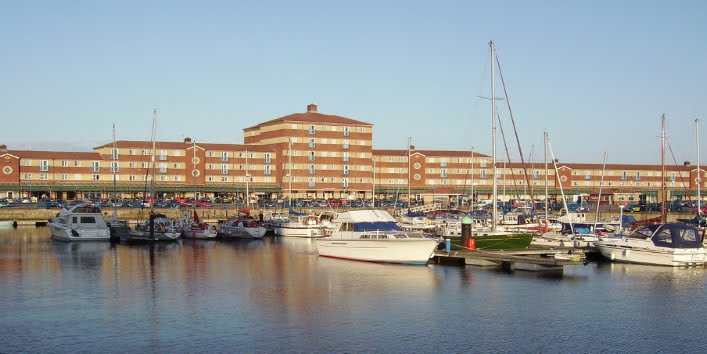
So there you are, what has Alicante got that Hartlepool hasn't? Just look at these pictures. Can you tell which town each was taken in?


Alicante is built around a natural harbour and is the main city and cruise port on Spain’s Costa Blanca. Of course Hartlepool's Mayor shared a similar vision for Hartlepool to occupy the position as the main city and cruise port on England's east coast, a vision that so far remains unfulfilled. Hartlepool and Alicante do however have many things in common, apart from the blue skies and warm sunshine of course. Alicante, is also a top beach resort in its own right (Hartlepol has the Block Sands and the paddling pool, although who knows for how much longer after the Heugh falls down). Alicante has a sophisticated Mediterranean feel (Hartlepool hasn't) with its restored old town (Hartlepool Headland) adding to its charm (rows of boarded up terraced houses waiting for new Housing Hartlepool Estates?). Alicante has the attraction of its sandy beaches (Seaton?). Dubbed the ‘City of Light’ when founded by the Romans (Hartlepool, dubbed the place they 'hang monkeys' by the French?), Alicante is still a relaxing place to walk around (As is Hartlepool because all the shops are shut).
Down from the impressive Castillo de Santa Barbara fortress (Hartlepool Civic Centre) which offers impressive views across the city, most activity centres in the streets around the Ayuntamiento (Church Street), a plaza area buzzing with restaurants and tapas bars. There are also many cafés along the seafront (Navigation Point).
Works by artists including Dali, Miro and Picasso are on show at the Museo de Arte Siglo and there is also an archaeological museum (Historic Quay and Museum of Hartlepool.
So there you are, what has Alicante got that Hartlepool hasn't? Just look at these pictures. Can you tell which town each was taken in?



Saturday, 27 August 2011
The only thing worse than being talked about.......
........is NOT being talked about (Oscar Wilde). Of course if you are involved in politics then most of what is said about you is untrue. The public however seem to be much more inclined to believe what they read on an anonymous website than they are to actually find out the real truth, especially f the anonymous website is full of bile and invective while the truth is much less titilating.
Anyway, the message board I am finding most amusing recently is one called "Junius" which proports to be an expose of the real UKIP. I find most of the rubbish posted on there to be exactly that...RUBBISH. When he (or she?) comments on events I know some of the background to, or have details about, I inevitably find he is so far off the mark that it is laughable. I therefore assume anything I do not know the details of, but upon which he pontificates, is similarly wide of the mark. I have just visited the site and he is ranting about the Ashford Call Centre. PLEASE! How long before he lets that go. I do occasionally find myself the subject of his bile. Just a few days ago, I was a Faragist Lickspittle who was put in place to manipulate and cheat to ensure a YES Vote in the PEP Ballot. Ensuring the "right" result would apparently be my route to a seat as an MEP next time! Strangely, there has been no comment from Junius about me since the NO Vote in the ballot! Am I still a Farage brown noser?
Anyway, the message board I am finding most amusing recently is one called "Junius" which proports to be an expose of the real UKIP. I find most of the rubbish posted on there to be exactly that...RUBBISH. When he (or she?) comments on events I know some of the background to, or have details about, I inevitably find he is so far off the mark that it is laughable. I therefore assume anything I do not know the details of, but upon which he pontificates, is similarly wide of the mark. I have just visited the site and he is ranting about the Ashford Call Centre. PLEASE! How long before he lets that go. I do occasionally find myself the subject of his bile. Just a few days ago, I was a Faragist Lickspittle who was put in place to manipulate and cheat to ensure a YES Vote in the PEP Ballot. Ensuring the "right" result would apparently be my route to a seat as an MEP next time! Strangely, there has been no comment from Junius about me since the NO Vote in the ballot! Am I still a Farage brown noser?
Tuesday, 23 August 2011
UKIP Conference Program Eastbourne 2011
Thursday 8 Sept
Agents Training 14.00-16.30, Hardwick Suite, ILTC
YI Conference 14.30-16.30, Spencer Suite, ILTC
Freedom Association 'Free Spirits' 17.00-18.15, Spencer Suite, ILTC
YI Public Speaking Contest Final 18.15-19.15, Spencer Suite, ILTC
Chairman's Reception 19.30–22.00, Gold Room, Winter Gardens
Launch of Gadfly Club at Chairman's Reception
Friday a.m.
Session Chairman: Steve Crowther, Executive Party Chairman
9.15 Video: Small Business vs Petty Bureaucracy
9.45 John Wallace, Chairman, SE Committee
Cllr Carolyn Heaps, Mayor of Eastbourne
10.00 Cllr Lisa Duffy
Mayor of Ramsey
10.10 Cllrs Peter Reeve and Chris Adams
Towards 2015 – a strategy for success
10.30 Parade of UKIP Councillors
10.40 Sanya-Jeet Thandi
Standing for UKIP
10.50 Neil Hamilton
Political Commentator, Sunday Express
11.05 Tea & coffee break
11.20 Patrick O'Flynn
Chief Political Columnist, Daily Express
11.35 Barry Madlener MEP
Party of Freedom (PVV), Netherlands
11.50 Timo Soini
Leader, True Finns
12.10 Nigel Farage MEP
Party Leader
12.45 ON THE FRINGE
Freedom Association –
YI – The rise of Euroscepticism in Europe
Pat Bryant – Should drugs be decriminalised?
Care Asset Management – Funding long-term care
NEC Candidate Hustings
Tim Congdon and Gerard Batten: The Cost of the EU (Cavendish Hotel)
1.00 LEADER'S LUNCH, Gold Room
Friday p.m. Session Chairman: Lisa Duffy, Party Director
14.00 Nicolas Dupont-Aignan MP
Forward the Republic Party (DLR), France
14.20 The Euro Crisis – Economists Panel
Prof Tim Congdon
Dr Petr Mach
Godfrey Bloom MEP
14.40 Jon Gaunt
Director, The EU Referendum Campaign
14.55 Gerard Batten MEP
After the Riots: What Next?
15.10 Alex Singleton
[Former leader writer, Daily Telegraph]
15.25 Tea & coffee break
15.40 Paul Doyle
Policy Focus: Defence
15.50 Michael Heaver
Policy Focus: Education
16.00 Robert Elliott
Policy Focus: Long-Term Care
16.10 Andrew Charalambous
Policy Focus: Housing
16.20 Eddie Bone
Campaign for an English Parliament
16.30 Paul Nuttall MEP with Tim Aker
Policy Review
17.15 ON THE FRINGE
Freedom Association – Should the Death Penalty be reintroduced?
Marta Andreasen – The EU Budget: Why we should not pay one penny more
Electoral Reform Society –
Westonaprice –
7.00 for 7.30 GALA DINNER, Floral Hall
Saturday a.m. Session Chairman: Steve Allison, Party Vice-Chairman
9.15 Video: Europe's Ill Wind (25 mins)
9.45 John Tennant
Working in the European Parliament
10.00 Harry Aldridge
Young Independence in 2011
10.15 Tom Booker and Steve Fowler
YI at Freshers' Fayres
10.20 James Moyies
Branch Revival Programme
10.35 Sean Howlett
YI working in branches
10.40 London 2012
David Coburn, Chairman, UKIP London
London Mayoral Candidate
Parade of London Assembly Candidates
11.00 Tea & coffee break
11.15 Steven Woolfe
Campaign brief: City of London
11.35 Bill Etheridge
Campaign against Political Correctness
11.45 Inez Ward
Campaign brief: Justice for Landlords
11.55 Joe Rukin
Campaign brief: Opposing HS2
12.05 Ben Pile
Campaign brief: Fighting the Turbines
12.45 ON THE FRINGE
Freedom Association – Where next for the BBC?
Christian Soldiers in UKIP
UKIP Friends of Israel
NEC Candidate Hustings
Disciplinary Committee elections
Saturday p.m. Session Chairman:
14.00 Motions
Submit your Speaker Request slips to Member Services before 13.00.
[Motion 1]
[Motion 2]
[Motion 3]
[Motion 4]
15.15 Leadership Q&A
Submit your questions to Member Services before 14.00.
15.35 Tea & coffee break
15.50 UKIP Gold Medal Awards
Party Chairman
16.30 Steve Crowther
Chairman's closing address
16.45 Anthems
Introduced by Michael Corby
17.00 Close
HAVE A SAFE JOURNEY HOME.
We look forward to seeing you at the 2012 Spring Conference in Skegness, on 2-3 March.
Agents Training 14.00-16.30, Hardwick Suite, ILTC
YI Conference 14.30-16.30, Spencer Suite, ILTC
Freedom Association 'Free Spirits' 17.00-18.15, Spencer Suite, ILTC
YI Public Speaking Contest Final 18.15-19.15, Spencer Suite, ILTC
Chairman's Reception 19.30–22.00, Gold Room, Winter Gardens
Launch of Gadfly Club at Chairman's Reception
Friday a.m.
Session Chairman: Steve Crowther, Executive Party Chairman
9.15 Video: Small Business vs Petty Bureaucracy
9.45 John Wallace, Chairman, SE Committee
Cllr Carolyn Heaps, Mayor of Eastbourne
10.00 Cllr Lisa Duffy
Mayor of Ramsey
10.10 Cllrs Peter Reeve and Chris Adams
Towards 2015 – a strategy for success
10.30 Parade of UKIP Councillors
10.40 Sanya-Jeet Thandi
Standing for UKIP
10.50 Neil Hamilton
Political Commentator, Sunday Express
11.05 Tea & coffee break
11.20 Patrick O'Flynn
Chief Political Columnist, Daily Express
11.35 Barry Madlener MEP
Party of Freedom (PVV), Netherlands
11.50 Timo Soini
Leader, True Finns
12.10 Nigel Farage MEP
Party Leader
12.45 ON THE FRINGE
Freedom Association –
YI – The rise of Euroscepticism in Europe
Pat Bryant – Should drugs be decriminalised?
Care Asset Management – Funding long-term care
NEC Candidate Hustings
Tim Congdon and Gerard Batten: The Cost of the EU (Cavendish Hotel)
1.00 LEADER'S LUNCH, Gold Room
Friday p.m. Session Chairman: Lisa Duffy, Party Director
14.00 Nicolas Dupont-Aignan MP
Forward the Republic Party (DLR), France
14.20 The Euro Crisis – Economists Panel
Prof Tim Congdon
Dr Petr Mach
Godfrey Bloom MEP
14.40 Jon Gaunt
Director, The EU Referendum Campaign
14.55 Gerard Batten MEP
After the Riots: What Next?
15.10 Alex Singleton
[Former leader writer, Daily Telegraph]
15.25 Tea & coffee break
15.40 Paul Doyle
Policy Focus: Defence
15.50 Michael Heaver
Policy Focus: Education
16.00 Robert Elliott
Policy Focus: Long-Term Care
16.10 Andrew Charalambous
Policy Focus: Housing
16.20 Eddie Bone
Campaign for an English Parliament
16.30 Paul Nuttall MEP with Tim Aker
Policy Review
17.15 ON THE FRINGE
Freedom Association – Should the Death Penalty be reintroduced?
Marta Andreasen – The EU Budget: Why we should not pay one penny more
Electoral Reform Society –
Westonaprice –
7.00 for 7.30 GALA DINNER, Floral Hall
Saturday a.m. Session Chairman: Steve Allison, Party Vice-Chairman
9.15 Video: Europe's Ill Wind (25 mins)
9.45 John Tennant
Working in the European Parliament
10.00 Harry Aldridge
Young Independence in 2011
10.15 Tom Booker and Steve Fowler
YI at Freshers' Fayres
10.20 James Moyies
Branch Revival Programme
10.35 Sean Howlett
YI working in branches
10.40 London 2012
David Coburn, Chairman, UKIP London
London Mayoral Candidate
Parade of London Assembly Candidates
11.00 Tea & coffee break
11.15 Steven Woolfe
Campaign brief: City of London
11.35 Bill Etheridge
Campaign against Political Correctness
11.45 Inez Ward
Campaign brief: Justice for Landlords
11.55 Joe Rukin
Campaign brief: Opposing HS2
12.05 Ben Pile
Campaign brief: Fighting the Turbines
12.45 ON THE FRINGE
Freedom Association – Where next for the BBC?
Christian Soldiers in UKIP
UKIP Friends of Israel
NEC Candidate Hustings
Disciplinary Committee elections
Saturday p.m. Session Chairman:
14.00 Motions
Submit your Speaker Request slips to Member Services before 13.00.
[Motion 1]
[Motion 2]
[Motion 3]
[Motion 4]
15.15 Leadership Q&A
Submit your questions to Member Services before 14.00.
15.35 Tea & coffee break
15.50 UKIP Gold Medal Awards
Party Chairman
16.30 Steve Crowther
Chairman's closing address
16.45 Anthems
Introduced by Michael Corby
17.00 Close
HAVE A SAFE JOURNEY HOME.
We look forward to seeing you at the 2012 Spring Conference in Skegness, on 2-3 March.
Mafia Country

The P&O Aurora is docked in Mafia country this morning, Palermo, Sicily's capital, which perches at the foot of Monte Pellgrino at the heart of a large natural harbour. Founded in the 5th century, it has alternately enjoyed and endured one of the most colourful histories of any Mediterranean city. Greeks, Romans, Carthaginians, Arabs, Goths, Vandals have all come and gone, leaving their mark on the population as well as the architecture.
Despite being a lively modern city where the million inhabitants going about their daily business with the traditional Italian mix of style, noise and organised confusion, there is history at every turn from the Arab-Norman artistry of the fabulous, mosaic-laden Palazzo dei Normanni to the Capuchin Catacombs full of Palermitans mummified by the Capuchin monks.
Just outside Palermo is Monreale with its lavishly decorated cathedral one of the worlds ten most visited monuments.
Just so long as there is a fridge magnet shop! The collection for Grandma Aileen must be getting quite big by now!

Sunday, 21 August 2011
Wind Farm Hub
I was pleased to read that Energy Minister Charles Hendry was very impressed with Hartlepool and the town is set to become the “Wind Farm Hub” of the east coast. Apparently the Mayor and Hartlepool MP are delighted that there are thousands of new jobs on the way to the town. Imagine my surprise when I was visiting Hull and discovered their MP was very enthusiastic over the Humberside special enterprise area and that it was going to make Hull the new east coast centre of wind turbine manufacturing. Some mistake surely?
Actually, according to Alex Samond, the east coast wind turbine centre is going to be in Aberdeen and is set to create 5,000 jobs in Scotland. I’m sorry to contradict him but the Isle of Sheppey in Kent is the favored site for Europe's biggest wind turbine factory with 2,000 new jobs. Of course the firm promising to build the plant in Kent is the same one who closed their plant on the Isle of Wight in 2009 due to lack of orders.
Wind turbines are currently being touted as the panacea that will cure all ills, bring 1,000s of well-paid manufacturing jobs and power a clean, green Britain. Unfortunately, not everywhere being promised these factories and jobs will actually get them. However, don’t worry, everyone knows that Hartlepool is set to be the hub of UK Wind Turbine Manufacturing! Energy minister Charles Hendry said so and if we in Hartlepool know one thing it's that the word of a government minister is rock solid! They never just say what people want to hear and then do the opposite! Do they?
http://www.hartlepoolmail.co.uk/news/business/green_energy_hub_is_backed_to_create_thousands_of_jobs_1_3519332
http://www.s1jobs.com/newsandguides/wind-turbine-manufacturing-could-create-5000-jobs-across-scotland.html
http://www.bbc.co.uk/news/uk-england-kent-14577602
http://www.guardian.co.uk/business/2009/apr/28/vestas-wind-turbine-factory-close
It's all just a CON Trick
Actually, according to Alex Samond, the east coast wind turbine centre is going to be in Aberdeen and is set to create 5,000 jobs in Scotland. I’m sorry to contradict him but the Isle of Sheppey in Kent is the favored site for Europe's biggest wind turbine factory with 2,000 new jobs. Of course the firm promising to build the plant in Kent is the same one who closed their plant on the Isle of Wight in 2009 due to lack of orders.
Wind turbines are currently being touted as the panacea that will cure all ills, bring 1,000s of well-paid manufacturing jobs and power a clean, green Britain. Unfortunately, not everywhere being promised these factories and jobs will actually get them. However, don’t worry, everyone knows that Hartlepool is set to be the hub of UK Wind Turbine Manufacturing! Energy minister Charles Hendry said so and if we in Hartlepool know one thing it's that the word of a government minister is rock solid! They never just say what people want to hear and then do the opposite! Do they?
http://www.hartlepoolmail.co.uk/news/business/green_energy_hub_is_backed_to_create_thousands_of_jobs_1_3519332
http://www.s1jobs.com/newsandguides/wind-turbine-manufacturing-could-create-5000-jobs-across-scotland.html
http://www.bbc.co.uk/news/uk-england-kent-14577602
http://www.guardian.co.uk/business/2009/apr/28/vestas-wind-turbine-factory-close
It's all just a CON Trick
Elected mayors. New idea or a re-packaged Victorian initiative?
As the twentieth century drew to a close local government was in a perilous state. According to White “For more than fifty years English local democracy has come under sustained attack from governments of every political complexion” (White 2004). This had produced excessive oversight from the national government in Westminster and local government that was effectively moribund and being driven by edict from the centre.
The status of local government in the year 2000 was almost identical to that which had existed 125 years earlier. Victorian local government approached the last quarter of the nineteenth century in a similarly depressed state to its modern counterpart. According to Simon Szreter, the Victorian town hall was, in most towns and cities “in an almost farcical state of low aspirations and low standards” (Szreter 2002).
"where once-proud corporations led by the town's leading men of affairs had put through great town improvements such as widening roads and building hospitals in the eighteenth century, municipal administration had now fallen into a mean state of bickering and 'do-nothingism'." (Szreter 2002).
The answer of the Gladstone government to the Victorian local civic lethargy was to re-vitalise the prestige of local government by encouraging civic activism. This led to the emergence of new local civic leaders, including the managing director of the West Midlands' biggest screw manufacturer (which ultimately became G.K.N.), Joseph Chamberlain, father of the future Conservative Prime Minster, Neville Chamberlain.
Joseph Chamberlain was elected mayor of Birmingham in 1875, for the third consecutive year, on the back his programme of ambitious municipal spending! Gladstone’s reforms were actually so successful that they produced a complete reversal of fortunes, with local government expenditure even outstripping that of central government. (Szreter 2002).
This persisted until the Labour government’s nationalisation programmes in the 1940s and 1950s began a return to central control. Ironically, nationalisation was what ultimately allowed the cycle of national vs local control to return to national dominance through the final destruction of local control by the privatisations of the Thatcher era.
"Nationalisation, by weakening the power of local government and by gathering together industries and services under central control, eased the path for privatisation when the political tables turned thirty years on." (White 2004).
Rejuvenation of local government
It was against this background in the late 1990s that the Blair Government was seeking a means of rejuvenating local government, with renewed local civic activism and increased civic pride. The government hit upon the concept of directly elected mayors as a means of reviving local democracy. According to a government consultation paper “Modernising local government”
"A mayor would be a highly visible figure. He or she would have been elected by the people rather than the council or party and would therefore focus attention outwards in the direction of the people rather than inwards towards fellow councillors. The mayor would be a strong political and community leader with whom the electorate could identify. Mayors will have to become well known to their electorate which could help increase interest in and understanding of local government." (Department of the Environment, Transport and the Regions 1998)
When the government’s proposals were translated into law, they actually gave local people the opportunity to have a real say in how local government was structured. Councils were made to undertake consultation with their residents over three types of alternative arrangements for their future council. The options were to have a directly elected mayor with a cabinet appointed by the mayor, a council leader appointed by the councillors with a cabinet appointed either by the council or the leader or a directly elected mayor and council manager (this last model was withdrawn in 2007).
An elected mayor is in post for four years and acts as the council’s political leader. This is a distinct and separate role from the current civic mayors, who change every twelve months and undertake a ceremonial role. Civic mayors are assumed to be non-political, although in reality it is unusual for the role to go outside the majority political party in a local authority.
Opinion polls have consistently shown that a directly elected mayor is an attractive proposition to between 55 and 75 per cent of the public (Market & Opinion Research International, 2008) but also that there is considerable confusion over the exact role and powers of an “executive” or directly elected mayor.
First elected mayors
A major change introduced by direct election is that a directly elected mayor need not be a councillor first. Anyone aged twenty-one years or older and satisfying certain residency requirements can stand as a candidate in a mayoral election.
This does rather open the door to “celebrity” and novelty candidates. Possibly the two most famous of these are Stuart Drummond, the “Monkey Mayor” in Hartlepool (British Broadcasting Corporation, 2002) and “Robocop" Ray Mallon in Middlesbrough.
The election of Stuart Drummond in particular was heavily criticized by the political establishment. Simon Hughes MP, then the Liberal Democrat Home Affairs spokesman, said on BBC Radio that Mr.Drummond's victory in Hartlepool highlighted the shortcomings in the system of directly elected mayors.
"We were against the idea of directly-elected mayors because we thought they allowed for gimmicks and superficial characters to succeed and we were clearly proved right." (Hughes 2002).
The monkey mascot's election success also lead Labour Party Chairman Charles Clarke, also speaking on BBC Radio, to admit the monkey mascot's success was "a serious issue" and that it may push the government into a rethink about the system of directly elected mayors. He further said,
"While there had been a positive mayoral result in Doncaster, where the Labour candidate won, the other end of it is the other guy elected in Hartlepool, the one in the monkey suit, who ridicules the whole system. Obviously we will have to weigh it all up ... but again like all these experiments, they are designed to encourage better ways of looking at local government and that is what we will continue to try to do." (Clarke 2002)
However, despite concerns about the electorate’s inability to vote for serious candidates, the mayoral programme was still felt by the Blair government to be the best way to meet its programme for “strong and prosperous communities” and to provide,
"transparent and accountable leadership which itself has important benefits. Such leadership firstly may provide a mechanism for regenerating interest in local politics. Secondly, a high profile local leader can potentially help create a more inclusive politics, providing an accessible focus point for businesses, the voluntary sector and interest groups, as well as voters." (Department for Communities and Local Government, 2006).
Despite central government’s support for the directly elected mayor model and the public interest generated by the election of individuals like the “Monkey Mayor” there were clear “No” votes rejecting the concept in vast majority of local authorities which held referenda on introducing the system. Since the post of elected mayor was created by the Blair government in the Local Government Act 2000 over 60 referenda have been held, resulting in the election of just 12 elected mayors, four of these being in London. (Hope and Wanduragala 2010).
The lack of public interest in a regenerated local government, via the elected mayor model, was even evident in the Prime Minister’s own constituency of Sedgefield. In a referendum in October 2001 the Sedgefield electorate voted 53% to 47% ((Turnout 33%) against the introduction of a directly elected mayor for Sedgefield District Council (BBC News 19 October 2001).
A review of the political progress of the elected mayors by Professor Colin Corpus concluded;
"The Blair government’s attempt to re-invigorate and refresh local political leadership, by introducing directly elected mayors, has resulted, by the way the mayoral model in England is currently configured, in little more than another route into the top local political post." (Corpus, 2009).
Continued Government support
However, despite the apparent failure of the elected mayoral system to catch the imagination of the general public the concept was included in the legislative programme for government published by the Conservative-Liberal Democrat Coalition in May 2010. (Cameron and Clegg 2010).
The coalition produced extensive proposals for a review of local government under the principles of “freedom, fairness and responsibility” which promised to create directly elected mayors in the twelve largest English cities, (subject to confirmatory referendums and full scrutiny by elected councillors). In a somewhat contradictory statement the coalition also promised to allow councils to return to the committee system should they wish to. The proposals to create more directly elected mayors while allowing existing elected mayors to be abolished illustrates the dichotomy that exists with the current mayoral system in England.
Since the field work was completed for this masters dissertation a new elected mayor, Peter Soulsby, has taken office in the City of Leicester but the concept has been rejected in towns as diverse as Welwyn (Kierenan 2010), Charnwood (Ashe, 2010) and Great Yarmouth (Pullinger 2011). In Charnwood only 32 people responded to a public consultation about the introduction of a directly elected mayor and most of them were in favour of a leader and cabinet model.
There are currently public consultations on-going in several major town and cities in the UK, most notably Birmingham, where two of the city’s MPs, John Hemming (Liberal Democrat) and Roger Godsiff (Labour) are leading a “No” campaign and a broad group of media, business and public sector professionals have formed the “Yes” campaign (Elkes 2011).
The involvement of members of parliament in campaigning for, or against, an elected mayor for towns in their constituencies has lead to some suggestions of a conflict of interest. The Tory MP for Castle Point, Rebecca Harris, signed a petition supporting a referendum on an elected mayor that resulted in an outcry from Castle Point council’s Conservative majority, who are opposed to the idea. Ms.Harris subsequently clarified her position as being opposed to the idea of an elected mayor “because it concentrates too much power in the hands of one individual”. However, she remains a supporter of the campaign to have a referendum on the question since she wants “allow people to have their say”. (Harris in Orbach 2010).
The Mayor of Mansfield expressed the opinion during the field work for this dissertation that “I think the big issue is of course, from the party political leaders viewpoint, is that they lose control, which is why they don’t like it.”
The status of local government in the year 2000 was almost identical to that which had existed 125 years earlier. Victorian local government approached the last quarter of the nineteenth century in a similarly depressed state to its modern counterpart. According to Simon Szreter, the Victorian town hall was, in most towns and cities “in an almost farcical state of low aspirations and low standards” (Szreter 2002).
"where once-proud corporations led by the town's leading men of affairs had put through great town improvements such as widening roads and building hospitals in the eighteenth century, municipal administration had now fallen into a mean state of bickering and 'do-nothingism'." (Szreter 2002).
The answer of the Gladstone government to the Victorian local civic lethargy was to re-vitalise the prestige of local government by encouraging civic activism. This led to the emergence of new local civic leaders, including the managing director of the West Midlands' biggest screw manufacturer (which ultimately became G.K.N.), Joseph Chamberlain, father of the future Conservative Prime Minster, Neville Chamberlain.
Joseph Chamberlain was elected mayor of Birmingham in 1875, for the third consecutive year, on the back his programme of ambitious municipal spending! Gladstone’s reforms were actually so successful that they produced a complete reversal of fortunes, with local government expenditure even outstripping that of central government. (Szreter 2002).
This persisted until the Labour government’s nationalisation programmes in the 1940s and 1950s began a return to central control. Ironically, nationalisation was what ultimately allowed the cycle of national vs local control to return to national dominance through the final destruction of local control by the privatisations of the Thatcher era.
"Nationalisation, by weakening the power of local government and by gathering together industries and services under central control, eased the path for privatisation when the political tables turned thirty years on." (White 2004).
Rejuvenation of local government
It was against this background in the late 1990s that the Blair Government was seeking a means of rejuvenating local government, with renewed local civic activism and increased civic pride. The government hit upon the concept of directly elected mayors as a means of reviving local democracy. According to a government consultation paper “Modernising local government”
"A mayor would be a highly visible figure. He or she would have been elected by the people rather than the council or party and would therefore focus attention outwards in the direction of the people rather than inwards towards fellow councillors. The mayor would be a strong political and community leader with whom the electorate could identify. Mayors will have to become well known to their electorate which could help increase interest in and understanding of local government." (Department of the Environment, Transport and the Regions 1998)
When the government’s proposals were translated into law, they actually gave local people the opportunity to have a real say in how local government was structured. Councils were made to undertake consultation with their residents over three types of alternative arrangements for their future council. The options were to have a directly elected mayor with a cabinet appointed by the mayor, a council leader appointed by the councillors with a cabinet appointed either by the council or the leader or a directly elected mayor and council manager (this last model was withdrawn in 2007).
An elected mayor is in post for four years and acts as the council’s political leader. This is a distinct and separate role from the current civic mayors, who change every twelve months and undertake a ceremonial role. Civic mayors are assumed to be non-political, although in reality it is unusual for the role to go outside the majority political party in a local authority.
Opinion polls have consistently shown that a directly elected mayor is an attractive proposition to between 55 and 75 per cent of the public (Market & Opinion Research International, 2008) but also that there is considerable confusion over the exact role and powers of an “executive” or directly elected mayor.
First elected mayors
A major change introduced by direct election is that a directly elected mayor need not be a councillor first. Anyone aged twenty-one years or older and satisfying certain residency requirements can stand as a candidate in a mayoral election.
This does rather open the door to “celebrity” and novelty candidates. Possibly the two most famous of these are Stuart Drummond, the “Monkey Mayor” in Hartlepool (British Broadcasting Corporation, 2002) and “Robocop" Ray Mallon in Middlesbrough.
The election of Stuart Drummond in particular was heavily criticized by the political establishment. Simon Hughes MP, then the Liberal Democrat Home Affairs spokesman, said on BBC Radio that Mr.Drummond's victory in Hartlepool highlighted the shortcomings in the system of directly elected mayors.
"We were against the idea of directly-elected mayors because we thought they allowed for gimmicks and superficial characters to succeed and we were clearly proved right." (Hughes 2002).
The monkey mascot's election success also lead Labour Party Chairman Charles Clarke, also speaking on BBC Radio, to admit the monkey mascot's success was "a serious issue" and that it may push the government into a rethink about the system of directly elected mayors. He further said,
"While there had been a positive mayoral result in Doncaster, where the Labour candidate won, the other end of it is the other guy elected in Hartlepool, the one in the monkey suit, who ridicules the whole system. Obviously we will have to weigh it all up ... but again like all these experiments, they are designed to encourage better ways of looking at local government and that is what we will continue to try to do." (Clarke 2002)
However, despite concerns about the electorate’s inability to vote for serious candidates, the mayoral programme was still felt by the Blair government to be the best way to meet its programme for “strong and prosperous communities” and to provide,
"transparent and accountable leadership which itself has important benefits. Such leadership firstly may provide a mechanism for regenerating interest in local politics. Secondly, a high profile local leader can potentially help create a more inclusive politics, providing an accessible focus point for businesses, the voluntary sector and interest groups, as well as voters." (Department for Communities and Local Government, 2006).
Despite central government’s support for the directly elected mayor model and the public interest generated by the election of individuals like the “Monkey Mayor” there were clear “No” votes rejecting the concept in vast majority of local authorities which held referenda on introducing the system. Since the post of elected mayor was created by the Blair government in the Local Government Act 2000 over 60 referenda have been held, resulting in the election of just 12 elected mayors, four of these being in London. (Hope and Wanduragala 2010).
The lack of public interest in a regenerated local government, via the elected mayor model, was even evident in the Prime Minister’s own constituency of Sedgefield. In a referendum in October 2001 the Sedgefield electorate voted 53% to 47% ((Turnout 33%) against the introduction of a directly elected mayor for Sedgefield District Council (BBC News 19 October 2001).
A review of the political progress of the elected mayors by Professor Colin Corpus concluded;
"The Blair government’s attempt to re-invigorate and refresh local political leadership, by introducing directly elected mayors, has resulted, by the way the mayoral model in England is currently configured, in little more than another route into the top local political post." (Corpus, 2009).
Continued Government support
However, despite the apparent failure of the elected mayoral system to catch the imagination of the general public the concept was included in the legislative programme for government published by the Conservative-Liberal Democrat Coalition in May 2010. (Cameron and Clegg 2010).
The coalition produced extensive proposals for a review of local government under the principles of “freedom, fairness and responsibility” which promised to create directly elected mayors in the twelve largest English cities, (subject to confirmatory referendums and full scrutiny by elected councillors). In a somewhat contradictory statement the coalition also promised to allow councils to return to the committee system should they wish to. The proposals to create more directly elected mayors while allowing existing elected mayors to be abolished illustrates the dichotomy that exists with the current mayoral system in England.
Since the field work was completed for this masters dissertation a new elected mayor, Peter Soulsby, has taken office in the City of Leicester but the concept has been rejected in towns as diverse as Welwyn (Kierenan 2010), Charnwood (Ashe, 2010) and Great Yarmouth (Pullinger 2011). In Charnwood only 32 people responded to a public consultation about the introduction of a directly elected mayor and most of them were in favour of a leader and cabinet model.
There are currently public consultations on-going in several major town and cities in the UK, most notably Birmingham, where two of the city’s MPs, John Hemming (Liberal Democrat) and Roger Godsiff (Labour) are leading a “No” campaign and a broad group of media, business and public sector professionals have formed the “Yes” campaign (Elkes 2011).
The involvement of members of parliament in campaigning for, or against, an elected mayor for towns in their constituencies has lead to some suggestions of a conflict of interest. The Tory MP for Castle Point, Rebecca Harris, signed a petition supporting a referendum on an elected mayor that resulted in an outcry from Castle Point council’s Conservative majority, who are opposed to the idea. Ms.Harris subsequently clarified her position as being opposed to the idea of an elected mayor “because it concentrates too much power in the hands of one individual”. However, she remains a supporter of the campaign to have a referendum on the question since she wants “allow people to have their say”. (Harris in Orbach 2010).
The Mayor of Mansfield expressed the opinion during the field work for this dissertation that “I think the big issue is of course, from the party political leaders viewpoint, is that they lose control, which is why they don’t like it.”
Subscribe to:
Posts (Atom)